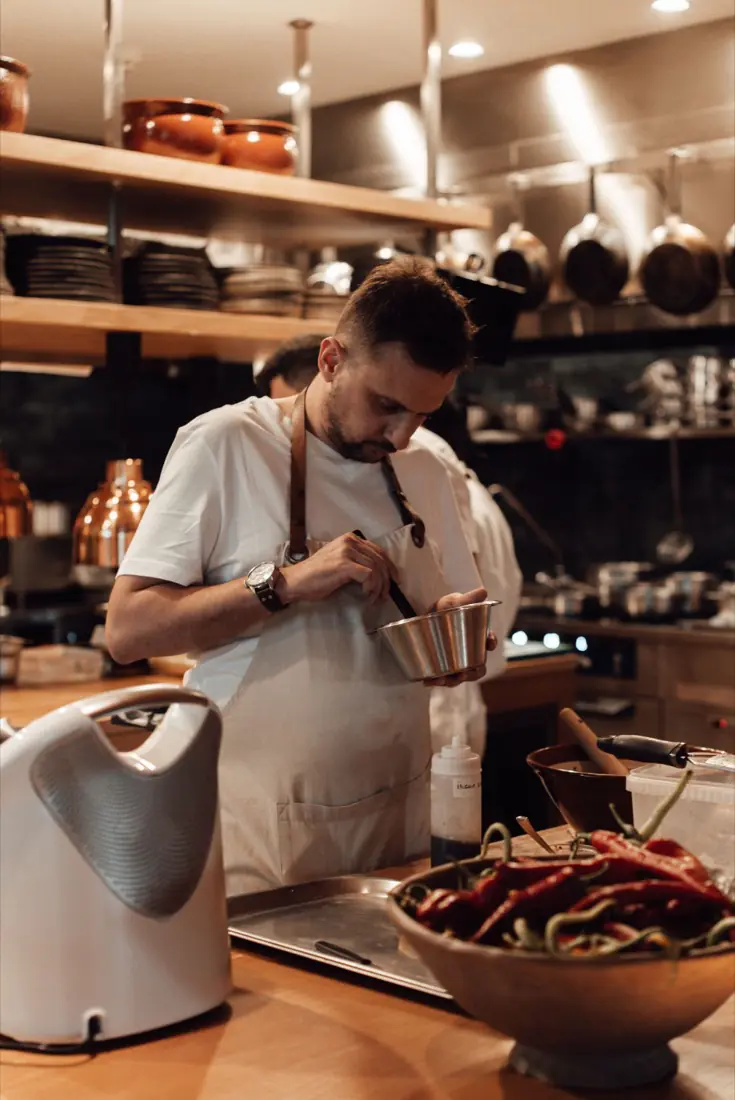
Web design for restaurants fails in the same way almost every time. The visitor came for the menu, the hours, the address or a table, and the site opens with a full screen video and a welcome message. Four answers, delivered fast, on a phone, is the entire job.
This is the layout I build for restaurants, in the order people actually want it, plus the things worth spending on and the ones that quietly cost you covers.
The four things every visitor came for
- The menu. Real text on a web page. Not a PDF, not a photograph of a printed menu, not a link to a social post from last year.
- Today's hours. Including the days you are closed and the hours the kitchen stops, which is a different time and the one people get wrong.
- Where you are and how to park. A tappable address that opens maps, and a line about parking if it is not obvious.
- How to get a table. Your booking link if you take bookings, a phone number if you do not, and a plain sentence saying which.
If all four are reachable within one screen and one tap on a phone, the site is doing its job. Everything after this point is about doing it well.
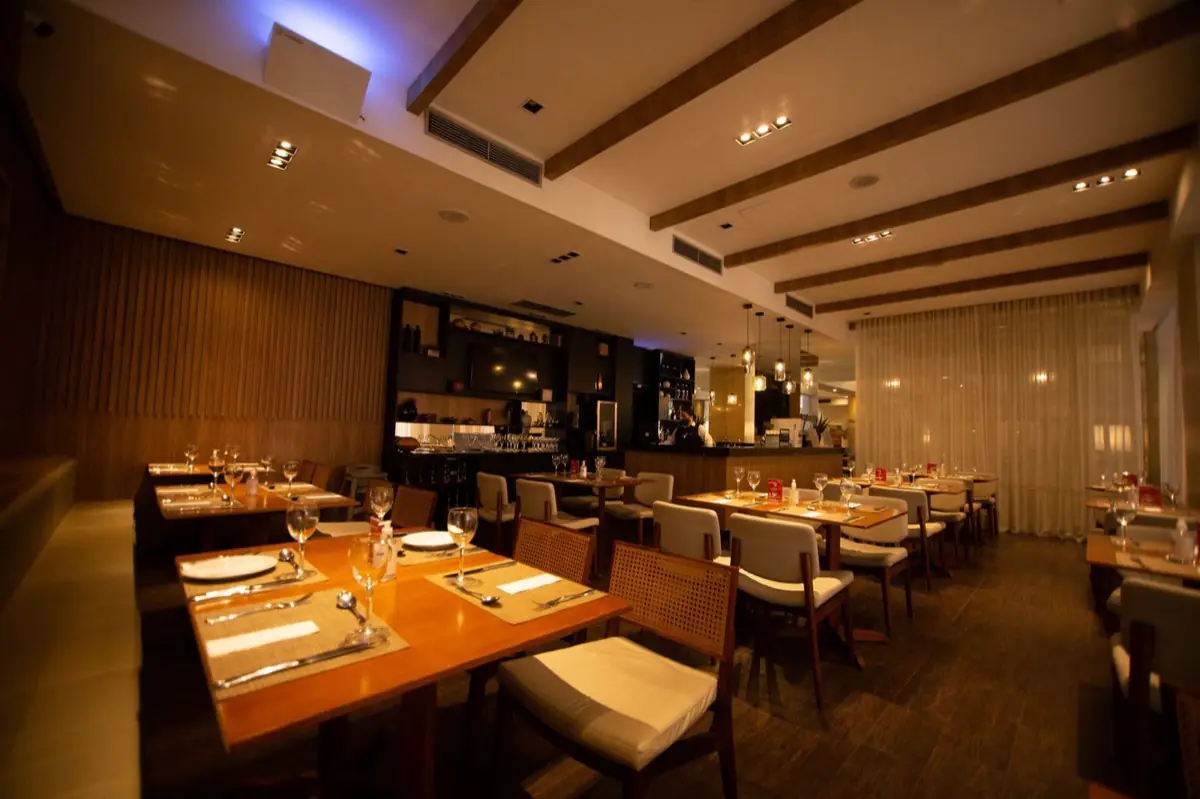 Photo: Pexels
Why a PDF menu costs you customers
A PDF is the most common mistake on restaurant sites and it is worth understanding why it is so expensive.
It downloads instead of opening, it is unreadable on a phone without pinching and dragging, screen readers struggle with it, and the text inside it is far less useful to search engines than a real page. Somebody searching for a dish you serve will not find you through a PDF. A menu built as a web page fixes all of that at once, and it is faster to update than exporting a new file every time a price changes.
Photographs of your food, not a stock library
Restaurants have an advantage almost no other business has: the product is photogenic and it is sitting in your kitchen right now. Use it, and never use stock food photography, because the gap between a stock plate and the real one is exactly the gap a customer will feel when the food arrives.
- Shoot near a window in daylight. Phone cameras handle daylight beautifully and restaurant lighting badly.
- Photograph the dishes you want to sell. Not the whole menu. Six to ten of the things you would like more people to order.
- Include the room. People are choosing an evening, not just a meal. One good photograph of the space does more than three more plates.
- Keep them current. A seasonal menu photographed in the wrong season is worse than no photograph.
Connecting what you already pay for
Most restaurants already have a booking system, an ordering platform, a payment terminal and a reviews profile. None of that needs rebuilding, and rebuilding it is how these projects get expensive.
Booking links, ordering links, delivery platforms, payment links, your reviews and your social accounts all connect to a site like this, and connecting them is included in what I build. If a thing already exists, I connect it. If it needs building from scratch, you want somebody else, and I will tell you that early rather than late.
What a restaurant website should cost
Home, menu, about, contact and directions is five pages, and that covers most restaurants. That is $449 at my prices, with the copy written for you, the technical SEO done, and everything you already use connected.
Add a page if you do private events or catering, because that is a different customer asking different questions and it is usually the most profitable enquiry you get. What is in each tier is set out on the what every build includes page.
Ordering, delivery, and the cut you are paying
If you take orders through a delivery platform, that platform takes a percentage of every order and owns the relationship with your customer. That is a fair trade for reach, and a terrible one for the customers who already know you and were going to order anyway.
So the site should make direct the easy option. Put your own ordering link or phone number above the platform links, not below them. Anybody who arrived at your website already chose you, and handing them straight to a platform is paying a commission for a customer you had.
Private events, the most profitable page you do not have
Private hire, large bookings and catering are usually the highest margin work a restaurant does, and they almost never have a page.
It needs very little: what the space holds, what a private booking costs or how it is priced, what food options exist, and one form. The enquiry is worth many times an average cover, and right now most of those people are giving up and calling somewhere with a page.
Being found by somebody who is hungry right now
A large share of restaurant searches happen within an hour of eating, on a phone, near you. That person needs three facts and they need them immediately: are you open, what is the food, how far away are you.
Make sure the answer is the same everywhere. Your hours on the website, on your business profile and on every delivery platform should match exactly, including holidays and the days you close the kitchen early. When they disagree, whichever is wrong is the one somebody is reading while standing outside your locked door.
It is all being read on a phone, standing up
Design the menu for a person holding a phone in one hand on a busy street. That means real text at a readable size, sections that can be jumped to, and no pinching or dragging. If reading your menu takes two hands and full attention, you have lost people who would have eaten with you.
The menu update problem, and how to avoid it
Every restaurant site eventually goes stale in the same place. The menu changes, the website does not, and within a year the page is quietly wrong about prices and dishes.
Two things prevent it. First, build the menu as a real page rather than an uploaded file, so changing a price is editing a line rather than exporting a new PDF from whoever has the design file. Second, decide now who does it and how often. A menu that gets checked on the first of every month stays right. A menu that gets updated when somebody remembers does not.
If seasonal changes are frequent, keep the printed prices for the things that rarely move and describe the rotating part as a section that changes, rather than listing dishes you will pull in three weeks. A visitor forgives a menu that says the specials change weekly. They do not forgive being charged four dollars more than the website said.
The practical details people search for at the last minute
A handful of small facts decide more bookings than anything else on the site, and they are the ones most restaurants leave off entirely.
- Parking. Where, and whether it is free. It is the single most common question for anywhere not on a high street.
- Step free access. Say what is true. Somebody planning an evening for a parent or a friend needs to know before they book, not when they arrive.
- Whether you take walk ins. And how busy a Friday usually is. Managing that expectation saves a bad review.
- Kids, dogs and large groups. Three yes or no answers that people currently have to phone to get.
What to take away
- Menu, hours, address, table. Four answers, one screen, one tap. The rest of the site is support.
- Never a PDF menu. It is slower, harder to read on a phone, and invisible to somebody searching for a dish you serve.
- Connect, do not rebuild. Your booking and ordering systems already work. The site should point at them, not replace them.
Questions people actually ask
What should a restaurant website include?
The menu as a real web page, today's opening hours including kitchen times, a tappable address that opens maps, and one obvious way to book a table or order.
Is a PDF menu bad for a restaurant website?
Yes. It downloads rather than opening, it is hard to read on a phone, and the text inside it is far less useful when somebody searches for a dish you serve. A menu page fixes all three and is quicker to update.
How much does a restaurant website cost?
Most restaurants need about five pages, which is $449 at my prices, including all the copywriting, the technical SEO and connecting your existing booking or ordering systems.
Do I need a website if I am on delivery apps and social media?
Those platforms take a cut and control what customers see. A site is the one place you set the menu, the hours and the booking route yourself, and it costs nothing monthly to keep running.
Should my website send people to delivery apps?
Put your own ordering route or phone number above the platform links. Somebody on your website already chose you, so handing them to a platform means paying a commission on a customer you already had.

Danny Ruiz
I build small business websites on my own. The design, the copy, the SEO and the hosting setup, all of it. One person, fixed prices, live in seven days.
Read next
Pricing
Website Design Packages Pricing, With Real Numbers Attached
My full price list, what counts as a page, and what is deliberately left out.
8 min read

Getting started
Do I Need a Website? Some Businesses Honestly Do Not
When a profile and a phone number are genuinely enough, and when they stop being enough.
8 min read
Content
What $150 Buys From a Monthly Blog Writing Service
What a content retainer should include, what it should cost, and when to skip it.
8 min read