
Web design for dentists is sold almost entirely on monthly contracts, where the site is only yours while you keep paying. A practice website is a five to seven page build. It should be bought once, owned outright, and it should be built around one job: turning a nervous stranger into a booked first appointment.
Here is what belongs on a dental site, what does not, and the contract terms worth checking before signing anything with anybody, me included.
The first appointment is the only thing that matters
Everything on a practice site is either helping somebody book, or it is decoration. Judged that way, most dental websites are mostly decoration.
A new patient needs four answers before they will call: are you taking new patients, do you take my insurance or what does it cost, when can I be seen, and will this be unpleasant. If those four are answered in the first screen, the phone rings more. If they are buried under a welcome message, it does not.
- Say you are accepting new patients. In words, near the top. It is the single most useful sentence on a dental homepage and most practices leave it out.
- Answer the money question. Insurance accepted, plans available, or the price of an exam. A number, a range, or a plainly stated policy is all it takes.
- Make booking one tap. A phone number that dials, and your booking system connected if you already use one. Not a form that goes to an inbox nobody watches.
- Address the fear directly. Say what a first visit is actually like, step by step. This is the paragraph that wins anxious patients and almost nobody writes it.
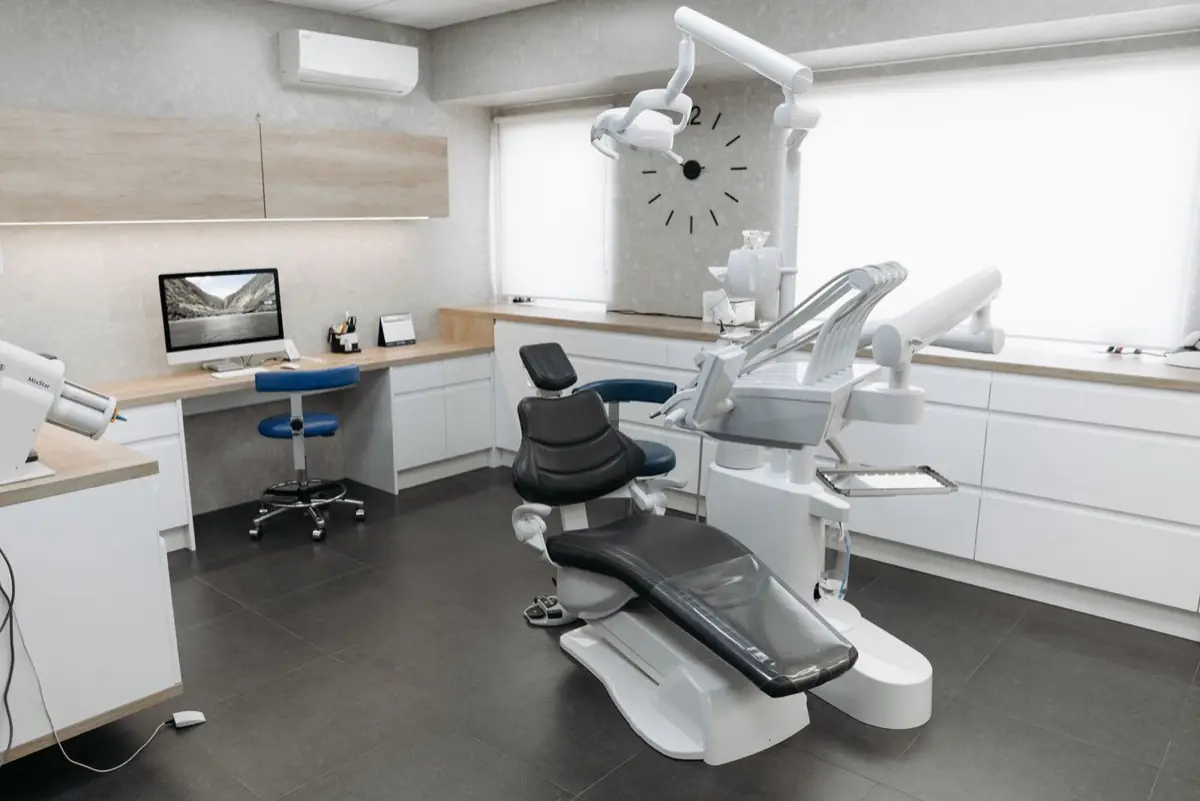 Photo: Pexels
Photographs of the actual practice, not a stock clinic
Dental sites are the worst offenders for stock photography, and it is self defeating. A patient choosing a dentist is deciding whether to trust a room and the people in it. A photograph of a model in a studio tells them nothing about either.
Photograph the reception, a treatment room and the people who work there. Even phone photos of the real place beat a stock library, because the visitor is checking whether it looks clean, calm and modern, and a stock image cannot answer that about your practice.
Which treatments deserve their own page
Give a page to the treatments people choose and shop around for. Keep the routine work in a list.
Where each treatment belongs on the site
| Type of treatment | Its own page | A line in a list |
|---|---|---|
| Implants, orthodontics, cosmetic work | Yes | No |
| Emergency appointments | Yes | No |
| Check ups, cleanings, fillings | No | Yes |
| Anything you want to be found for | Yes | No |
The test is whether somebody researches and compares it before booking. If they do, it needs a page.
A note on what your forms should collect
Keep the website form to a name, a phone number, an email and a short message. Nothing clinical.
The contract terms worth reading twice
This is where dental web design differs from most other industries. A lot of what is sold to practices is a lease dressed as a build, and the terms are usually in the part nobody reads.
- Who owns the domain. It should be registered to the practice. If the agency holds it, moving means starting over.
- What happens if you stop paying. If the answer is that the site comes down, you never bought a website. You rented one.
- The length of the term. Month to month is fine. Twelve or twenty four month minimums are worth questioning.
- What the monthly fee actually buys. Hosting a site this size costs very little. If the fee is meaningful, ask what work is being done for it and ask to see it.
What a dental website should cost
Home, about the practice, two or three treatment pages, new patient information and contact is five to seven pages. That is $449 to $599 at my prices, once, with all the copy written for you and the technical SEO included.
Hosting is free permanently on an account in the practice's own name, and you hold the logins from day one. If you also want somebody publishing content and keeping things current every month, that is a separate and optional $150, which is deliberately not bundled into the build. The full breakdown is on the what every build includes page.
The new patient page nearly every practice is missing
Most dental sites have a services list and a contact page and nothing that speaks to the person who has not chosen you yet. That is the page that converts, and it is usually not there.
It answers the practical worries in order: are you accepting new patients, what happens at a first visit, how long it takes, what it costs, what to bring, where to park, and what happens if somebody is nervous. None of that is clinical information. It is logistics and reassurance, and it is the difference between a visitor and a booking.
How to talk about cost and insurance
Cost is the most searched and least answered question on dental sites. You do not have to publish a full fee schedule to answer it.
- List the plans you take. Just the names. It is the fastest yes or no a visitor can get, and it stops calls that were never going to convert.
- Give the price of an exam. One number, for the appointment nearly every new patient books first.
- Explain payment options plainly. Plans, financing, what is due on the day. If you offer a membership plan, that deserves its own page.
- Say what happens if somebody has no insurance. A large share of your visitors, and almost nobody addresses them directly.
Reviews, without claiming anything you cannot show
Link to the reviews you have rather than retyping them. If a rating is displayed, it has to be the real one, from a source somebody can click through and verify.
Never invent a testimonial and never round a rating up. In a field where trust is the entire product, being caught inflating proof does more damage than having less of it. If the review count is low, the fix is asking for more, not decorating the ones you have.
Emergency appointments, and the page nobody builds
Somebody in pain at seven in the morning is the most motivated visitor your website will ever have, and they are usually met with a services list and an office number.
Give them a page. What counts as a dental emergency, whether you keep slots free each day, what to do right now before they get to you, what it costs, and one obvious way to reach you. Say plainly what happens outside opening hours, even if the answer is that you are closed and here is who to call instead.
It is one page, it is not clinically complicated, and it catches people at the exact moment they will accept the first practice that answers clearly. It is also the page most likely to turn a stranger in pain into a patient who stays.
What to take away
- Answer four questions in the first screen. Taking new patients, cost or insurance, when they can be seen, and what a first visit is like.
- Real photographs of the real practice. Patients are judging the room and the people. Stock cannot answer that.
- Own it outright. Domain in the practice name, files handed over, and a site that does not switch off when the invoices stop.
Questions people actually ask
What should a dental practice website include?
A clear statement that you are accepting new patients, how costs and insurance work, one tap booking, an honest description of a first visit, photographs of the real practice, and separate pages for the treatments people shop around for.
How much should a dentist pay for a website?
A practice site is a five to seven page build, which is $449 to $599 at my prices, paid once, with copywriting and technical SEO included and no monthly fee for hosting.
Should a dental website form collect medical information?
No. Keep it to a name, phone number, email and short message. Anything clinical belongs in your practice management system behind its own login, and specific requirements should be checked with whoever advises the practice on compliance.
Is a monthly dental marketing contract worth it?
It depends entirely on whether work is being done every month that you can see. Paying monthly for hosting alone is poor value, and any arrangement where the site comes down if you stop paying is a rental, not a purchase.
What is the most important page on a dental website?
A new patient page that answers whether you are accepting patients, what a first visit involves, what it costs, what to bring and where to park. Most practices do not have one.

Danny Ruiz
I build small business websites on my own. The design, the copy, the SEO and the hosting setup, all of it. One person, fixed prices, live in seven days.
Read next

Pricing
Website Design Packages Pricing, With Real Numbers Attached
My full price list, what counts as a page, and what is deliberately left out.
8 min read

Content
What $150 Buys From a Monthly Blog Writing Service
What a content retainer should include, what it should cost, and when to skip it.
8 min read

Hiring
The Questions to Ask Web Designer Candidates Before Paying
Nine questions, the answers to listen for, and the ones that should end the call.
8 min read